Table of Contents
Johnson County Courts, TN *

Trial courts in Johnson County play a significant role in handling a wide range of legal issues affecting residents, visitors, and businesses operating in the area. These legal issues include traffic, probate, family, juvenile, criminal, and civil matters occurring in the county. People seek judicial services to help them resolve various cases, such as divorces, estate matters, civil claims, felonies, and violations of city ordinances. Court records are useful to landlords, legal researchers, employers, attorneys, and the general public with closed or ongoing legal issues for various purposes. For example, lawyers often use court records to prepare for upcoming court hearings, while landlords may need these records to review past eviction proceedings. Understanding how the county's court system operates and knowing where to find court records may help people avoid stress and delays.
How to Access Johnson County Court Records

 Online Access
Johnson County is one of the Tennessee counties that has an online public court records section. One can access criminal and civil court records online through the county's online court records system, maintained by the Circuit and General Sessions Courts Clerk. This system allows users to search using party name, case number, type of court and case, and year of filing. Before beginning the search, it's recommended to gather as much information about the case as possible to help narrow down the search.
 Alternative Online Options
Official databases may be overwhelming and challenging to use, especially for first-time users. Sometimes, one may need an alternative to access court records that are not available on the county's online court records system. In such circumstances, one should opt for CourtCaseFinder, which provides access to a wide variety of publicly available court records gathered from multiple sources and combined in a single platform. This tool may be useful when searchers want to access records from multiple jurisdictions, even across the state.
 In-Person Requests
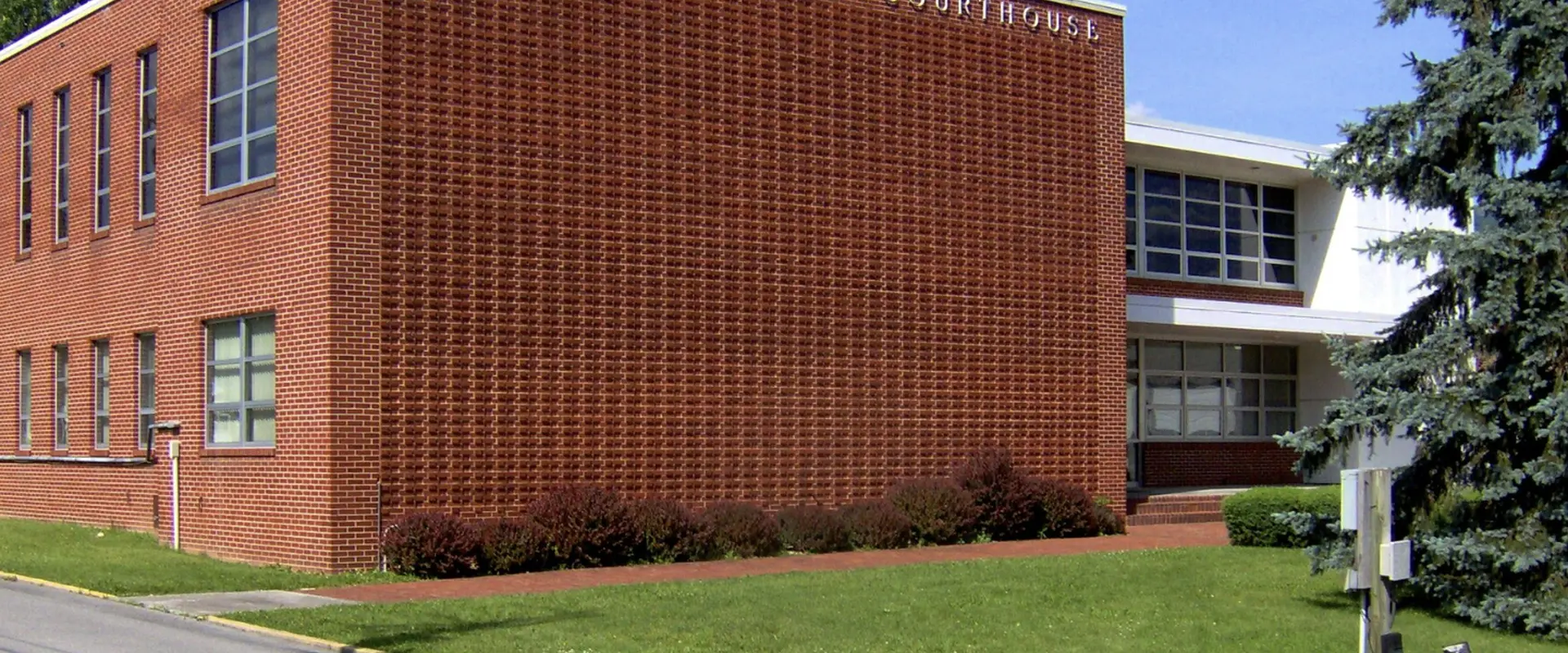
Some court records, including those that don't appear in online searches and older court records, are accessible through in-person requests at the appropriate court clerk's office at the Johnson County Courthouse. In Johnson County, the Circuit Court Clerk maintains records for both the Circuit Court and the General Sessions Court, whereas the Chancery Court has its separate Clerk and Master, who is the custodian of its records. The staff at the clerk's office may help with finding physical case files, certified copies, and archived records. When visiting the courthouse, one should bring along case identifiers (including case numbers and filing dates) to help expedite the search.
 Archived Records
Archived records include older or historical court cases that are no longer active as they've been closed, resolved, or completed. Those seeking such records in Johnson County should contact the appropriate court clerk for assistance. For historical records, they may check with the Tennessee State Library and Archives located in Nashville, as it preserves historical records (government records and court cases) from across the state.
Overview of the Johnson County Court System

Johnson County courts operate under the unified Tennessee court system managed by the Administrative Office of the Courts. The statewide court structure consists of the Tennessee Supreme Court, which is the state's highest court (court of last resort), followed by the intermediate appellate courts: the Court of Appeals for civil appeals and the Court of Criminal Appeals for only criminal appeals from the trial courts. The county-level trial courts are the Circuit, Criminal, Probate, Chancery, General Sessions, Juvenile, and Municipal Courts, with each county having its specific courts.
The primary trial courts in Johnson County include the Circuit Court, Chancery Court, General Sessions Court, and Juvenile Court. The county seat of Johnson is Mountain City, which also has a Municipal Court. The county's Circuit Court is part of the state's First Judicial District, which also includes Unicoi, Washington, and Carter counties. This court hears major civil and serious criminal cases happening in the county. The Chancery Court in Johnson is responsible for equity, probate, and child support matters, while the General Sessions Court has authority over a wide range of lower-level criminal and civil cases. This court is also responsible for preliminary hearings for felonies, and its judge also presides over the Juvenile Court's cases. The Mountain City Municipal Court handles minor traffic offenses and local ordinance violations within the city's limits.
Types of Courts in Johnson County, Tennessee
 Circuit Court
The Circuit Court is the county's highest trial court and handles major civil litigation and serious criminal cases. This court also hears appeals from the General Sessions Court before they may move to the state's appellate courts. The Circuit Court Clerk also manages records for the county's General Circuit Court.
Primary location: Johnson County Courthouse, Mountain City
Jurisdiction includes:
- Civil lawsuits with the disputed amount exceeding $25,000
- Criminal felony cases, including murder and arson
- Appeals coming from the General Sessions Court
- Certain domestic and relations matters like divorces
 Chancery Court
The Johnson County Chancery Court has original jurisdiction over equity, family law matters involving child support, and probate matters. It also manages certain civil cases within its jurisdiction.
Primary location: Johnson County Courthouse, Mountain City
Its jurisdiction includes cases such as:
- Probate proceedings (for example, wills, trusts, and estate administration)
- Cases of child support
- Divorces
- Paternity and adoption cases
- Guardianships and Conservatorships involving minors and adults
- Certain civil cases, like debt and contract disputes
- Partitions and land disputes
 General Sessions Court
The county's General Sessions Court is responsible for a wide variety of lower-level civil and criminal cases that commonly affect businesses and residents, making it usually where most people start their cases. Preliminary hearings of felonies also take place in this court.
Primary location: Johnson County Courthouse, Mountain City
Jurisdiction includes:
- Misdemeanors, such as petty theft
- Preliminary hearings in felony criminal cases
- Minor civil claims with damages less than $25,000
- Small claims
- Housing issues like evictions
- Traffic violations in the county (for example, DUI cases)
 Juvenile Court
The Juvenile Court of Johnson County is responsible for cases involving minors and some legal family issues affecting families and children under 18. This court shares a judge with the county's General Sessions Court, who presides over the Juvenile Court's proceedings separately for ordinary General Sessions cases.
Primary location: Johnson County Courthouse, Mountain City
It has authority over cases such as:
- Delinquency acts
- Unruly behaviors cases
- Dependency matters, including abuse and neglect cases involving children
- Termination of parental rights
 Municipal Court
There is a single municipal court in Johnson County serving Mountain City. The Mountain City Municipal Court manages traffic violations and city code and ordinance violations happening within the city's limits.
Primary location: The City Hall, Mountain City
Cases under its jurisdiction include:
- Traffic citations and other minor traffic rule violations, such as reckless driving in the city
- Violations of local ordinances (including public intoxication)
How to File a Case in Johnson County

To effectively lodge a case in Johnson County, one must follow local court rules and each step of the filing process. Filing errors, such as the wrong court or missing documents, may waste time or result in case dismissal.
Step 1: Choose the Correct Court
Filers must begin by determining the county's trial court with jurisdiction over their case. Generally, significant civil cases with claims above $25,000 are filed with the Circuit Court. However, those with civil claims of up to $25,000 should take their case to the General Sessions Court, which also handles minor civil claims. The county's Chancery Court is responsible for equity cases, such as land disputes and probate matters. One can also file child support cases with this court. The county's Juvenile Court is responsible for all juvenile cases and some family law issues, while violations of city ordinances and code within the limits of Mountain City go to the city's municipal court.
 Step 2: Complete Required Forms
The second important step is to obtain and complete the required court forms, which vary depending on the court and case type. There are statewide approved court forms on the Tennessee Courts website for various cases, including certain civil cases, General Sessions Court cases, and Juvenile Court cases. Chancery Court forms are accessible through the court's Clerk and Master's website. Filers should fill out the forms accurately and include all the required information and supporting documents, such as contracts, to avoid filing rejection.
 Step 3: File the Case
When the paperwork is ready, it should be submitted to the appropriate court clerk. Filing in Johnson County is done in person at the clerk's office in the county's main courthouse, but filers should contact the relevant court clerk to ask for the permitted filing method before visiting the office. After submission, the clerk will review the documents and assign a case number.
 Step 4: Pay Filing Fees
There are filing fees that must be paid when filing civil cases, and the required amount differs depending on the court and the case type, just like the court forms. Filers should contact the clerk of the court where they should file their case to confirm the court's current fee schedule and accepted payment methods before making any payments. In Tennessee, individuals who are unable to afford the court costs may ask for a fee waiver by submitting the Uniform Civil Affidavit of Indigency form together with the other filing documents.
 Step 5: Serve the Other Party
Serving the other party is another important step of the filing process in the county. The other party in the case, or the defendant, must be officially notified that they are being sued. In accordance with the state's Rules of Civil Procedure, service may be effected through the sheriff's office, certified mail, or a licensed private process server, but not by any party involved in the case. Once service has been properly completed, the plaintiff should file the proof of service with the court, since without this evidence, the case may not move on to the next stage.
 Step 6: Monitor the Case
It's advisable for both parties in the case to monitor it after successful filing and service. They should use the assigned case number to access case information on the county's online court records system or contact the appropriate court clerk. Case tracking is important as it helps avoid missing any hearing dates, court orders, deadlines, new motions, and any other new updates.
Johnson County Courthouse Directory
Johnson County Courthouse (Circuit, Chancery, General Sessions, and Juvenile Courts)
Mountain City
Address: 222 W Main St., Mountain City, TN 37683
Phone:
Circuit Court Clerk: (423) 727-9012
Chancery Court Clerk & Master: (423) 727-7853
Mountain City Municipal Court
Mountain City
Address: 210 S. Church St., Mountain City, TN 37683
Phone: (423) 727-8005/(423) 727-2918
Website: Municipal Court of Mountain City
Legal and Self-Help Resources
Anyone dealing with legal issues in Johnson County needing assistance with their matter can access several legal and self-help resources. Here are some of the legal aid organizations and programs serving Johnson County.
Legal Aid of East Tennessee, through its office in Johnson City, serves residents of Johnson County by providing free civil legal assistance, pro bono volunteer clinics, and legal education programs to eligible individuals. They offer legal services to help with issues that include housing matters like evictions, family law cases, including divorces, elder law, and public benefits.
The Tennessee Alliance for Legal Services provides legal help resources suitable for individuals with civil, family law, and elder law matters. Through its programs, including Help4TN.org, people, including those with divorce and bankruptcy cases, can access legal information. There is also Tennessee Free Legal Answers, which is a virtual legal clinic where eligible individuals can post questions related to civil legal matters to be answered by state lawyers specializing in that issue.
FAQs
How do I search for a criminal case in Johnson County?
To search for a criminal case in Johnson County, one can use the county's online court records system. They can also use CourtCaseFinder as an alternative since it provides access to publicly available court records from across the nation, including criminal cases. For cases that don't appear on the online search, they should call or visit the office of the Circuit Court Clerk for assistance. Searchers should provide case identifiers such as the defendant's name and case type.
Are court records public in Johnson County?
Most court records in Johnson County are available for public viewing. However, certain cases are considered confidential and are restricted, sealed, or otherwise protected from public access. These include family law matters like adoptions, juvenile cases, and some mental health commitment cases. Through a court order, some criminal cases may be sealed to protect the privacy of the victims.
Where can I find probate records?
In Johnson County, probate proceedings are handled by the Chancery Court in its Probate Court Division. One can obtain these records from the court's Clerk & Master's office, which maintains records involving probate matters such as wills, guardianships, conservatorships, trusts, and estates. For historical probate records, one may be directed to the state's Library and Archives, which holds court records transferred for permanent safekeeping.
Other Counties in Tennessee
- Anderson
- Bedford
- Benton
- Bledsoe
- Blount
- Bradley
- Campbell
- Cannon
- Carroll
- Carter
- Cheatham
- Chester
- Claiborne
- Clay
- Cocke
- Coffee
- Crockett
- Cumberland
- Davidson
- Decatur
- Dekalb
- Dickson
- Dyer
- Fayette
- Fentress
- Franklin
- Gibson
- Giles
- Grainger
- Greene
- Grundy
- Hamblen
- Hamilton
- Hancock
- Hardeman
- Hardin
- Hawkins
- Haywood
- Henderson
- Henry
- Hickman
- Houston
- Humphreys
- Jackson
- Jefferson
- Knox
- Lake
- Lauderdale
- Lawrence
- Lewis
- Lincoln
- Loudon
- Macon
- Madison
- Marion
- Marshall
- Maury
- Mcminn
- Mcnairy
- Meigs
- Monroe
- Montgomery
- Moore
- Morgan
- Obion
- Overton
- Perry
- Pickett
- Polk
- Putnam
- Rhea
- Roane
- Robertson
- Rutherford
- Scott
- Sequatchie
- Sevier
- Shelby
- Smith
- Stewart
- Sullivan
- Sumner
- Tipton
- Trousdale
- Unicoi
- Union
- Van Buren
- Warren
- Washington
- Wayne
- Weakley
- White
- Williamson
- Wilson
Table of Contents
